EVERYDAY TECHNOLOGY · OCTOBER 12, 2026 · 8 MIN READ
How Does Wireless Charging Work Without Wires?
Your phone charges without a cable plugged into it. Discover how changing magnetic fields move energy across a tiny air gap, why alignment matters, and where the energy goes.
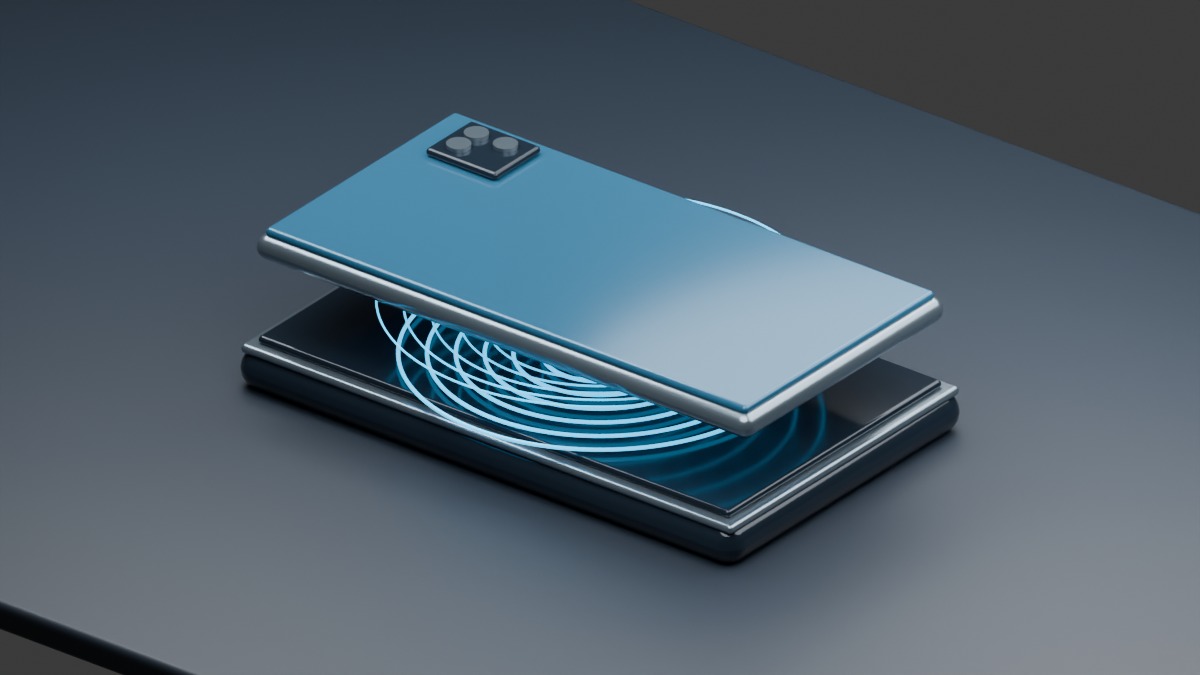
The invisible connection between charger and phone
Place a compatible phone on a wireless charging pad and the battery starts charging, even though no metal connector touches the phone. The secret is not electricity travelling freely through the room. It is electromagnetic induction: a changing magnetic field transfers energy across the short gap between two coils.
Step 1: Electricity flows through the charging pad
The pad takes power from a wall adapter and its electronics drive an alternating current through a copper coil. Unlike a steady current, an alternating current changes direction repeatedly. This creates a magnetic field that also changes with time.
Step 2: The magnetic field reaches a second coil
Inside the phone is another carefully positioned coil. As the changing magnetic field from the pad passes through it, a voltage is induced in that coil. This is the same underlying principle used in electrical transformers. No physical electrical contact between the coils is needed.
Step 3: The phone turns that energy into battery power
The voltage induced in the receiving coil is alternating. The phone's power electronics rectify and regulate it into controlled direct current suitable for charging the battery. A battery-management system monitors conditions such as voltage, temperature and charging state.
Why must the phone be close to the pad?
Most everyday phone chargers use near-field inductive coupling, which works over short distances. The magnetic coupling weakens quickly as the coils move apart or become misaligned. That is why a phone may charge slowly or stop charging when it is positioned poorly. Magnetic alignment systems help place the coils correctly.
Does the charging pad waste electricity?
Yes, some energy becomes heat in the coils, electronics and surrounding materials. Wireless charging is often less efficient than a well-matched wired charger, though the difference depends on the products and conditions. Cases, alignment, charging speed and temperature can all affect performance.
Can a metal object become hot?
A changing magnetic field can induce currents in nearby conductive objects. Loose coins, keys or other metal objects between a phone and a charger may heat up. Certified chargers use foreign-object detection and other protections, but it is still wise to keep the pad clear.
Is wireless charging the same as Wi-Fi?
No. Wi-Fi sends information using propagating radio waves over comparatively long distances. Common phone charging pads transfer useful power primarily through closely coupled magnetic fields across a small gap. Both involve electromagnetism, but their purposes and operating arrangements differ.
What are Qi and Qi2?
Qi is a wireless charging standard maintained by the Wireless Power Consortium. It helps compatible phones and chargers coordinate power transfer and safety. Qi2 introduced a magnetic alignment approach for supported devices; compatibility and charging power still depend on the particular phone, charger and adapter.
Could we charge a phone from across the room?
Longer-distance wireless power transfer is a real research and engineering topic, but it introduces challenges involving efficiency, beam control, safety, regulations and cost. It is not how ordinary phone charging pads work today.
Try a simple experiment
Place a compatible phone on a wireless charger and note when charging begins. Shift it slightly and see whether the indicator changes. If the phone or pad feels unusually hot, stop and check the charger, case and any foreign objects. Do not place loose metal objects on the pad.
The big idea
Wireless charging does not eliminate the need for wires everywhere: the charging pad still needs a power source, and copper coils exist inside both devices. What disappears is the physical charging connector between them. A carefully controlled changing magnetic field bridges that final small gap.
Sources and further reading
Wireless Power Consortium (Qi and Qi2) · Electromagnetic induction overview